Traditional focaccia benefits enormously from a long, slow fermentation. It develops deeper flavour, better structure and a beautiful, airy crumb. I know this. I've made it. I respect the process. But getting eight hours of sleep is important too, and you don't see me doing that either.
This is focaccia for people who want good bread today, not Thursday. People who decide at eleven in the morning that they absolutely must have focaccia for lunch, despite having made no preparations whatsoever.
It delivers about 90% of the result in a fraction of the time, with a straightforward method, very little effort and no special equipment. The dough is sticky, the olive oil is generous, and the finished bread is soft, airy and beautifully crisp around the edges.
Use the best olive oil you can reasonably afford, don't panic about the dough, and resist the temptation to complicate things. Sometimes good bread is just good bread.
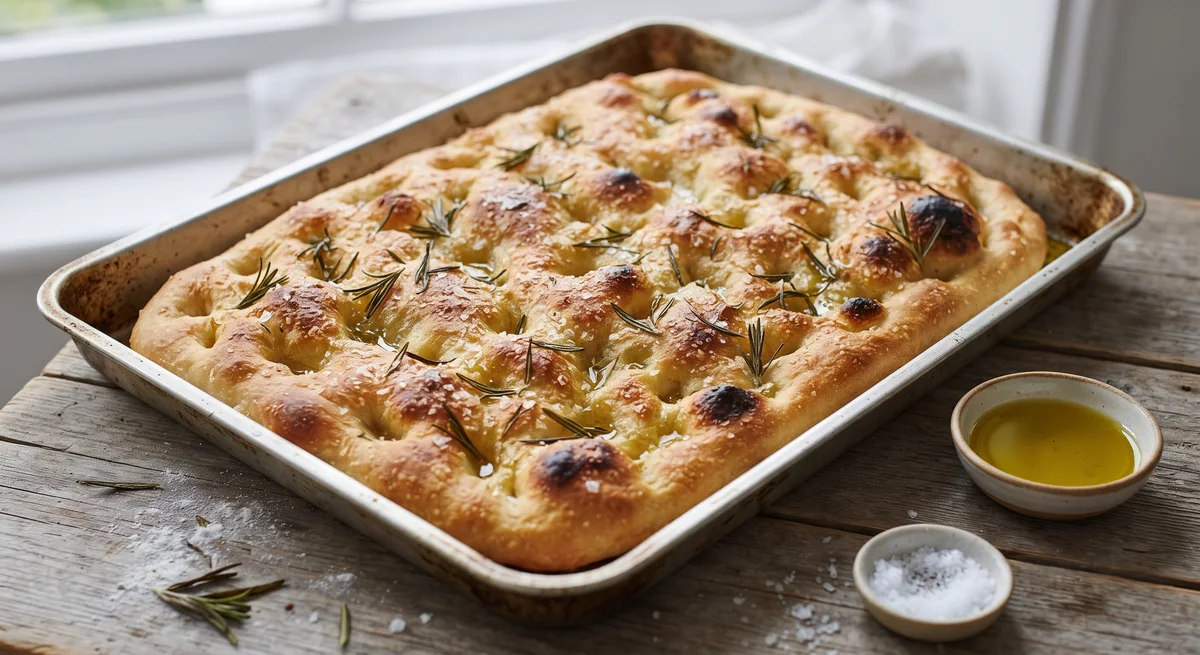
ADHD Focaccia
90% of the bread. 10% of the patience.
Makes: 1 large focaccia, approximately 8 generous portions
Prep: 15 minutes active
Bake: 20–25 minutes
Rising: Approximately 1½–2¼ hours, including resting
Total: Approximately 2½–3 hours
Ingredients
- 325 g strong white bread flour
- 235 ml lukewarm water
- 7 g instant dried yeast
- 5 g caster sugar
- 8 g fine sea salt
- 60 ml good-quality extra-virgin olive oil, divided
- Flaky sea salt, for finishing
Method
- Make the dough.
Combine the flour, lukewarm water, yeast, sugar, fine salt and 15 ml of the olive oil in a large mixing bowl. Stir with a wooden spoon or sturdy spatula until everything comes together into a wet, sticky dough with no dry flour remaining.
Don't panic about the consistency. It's supposed to be sticky, and it won't look much like a conventional bread dough.
- Give it a little attention.
Cover the bowl and leave the dough to rest for 15 minutes.
With wet hands, grab one edge of the dough, stretch it upwards and fold it over the centre. Turn the bowl a quarter turn and repeat until you've worked your way around all four sides.
If you're feeling enthusiastic, repeat the process after another 10–15 minutes. If you're not, don't. This is forgiving bread.
Alternatively, use a stand mixer fitted with a dough hook. Mix on low speed for approximately 5–7 minutes, until the dough becomes smoother and more elastic. It will still be sticky.
- Let it rise.
Cover the bowl with a lid, damp cloth or reusable wrap and leave somewhere comfortably warm for approximately 60–90 minutes, until the dough is noticeably expanded, airy and full of bubbles.
Don't obsess over the clock. A warm kitchen will move things along nicely; a cold one will take longer. What matters is that the dough has risen properly.
- Into the tin.
Pour 25 ml of olive oil into a 23 × 33 cm baking tin, coating the bottom and sides.
Gently transfer the risen dough into the tin, taking care not to knock out all the lovely air you've just spent an hour developing.
Turn the dough over once to coat it in oil, then gently encourage it towards the corners with your fingertips. If it keeps springing back, leave it alone for five minutes and try again.
- One last rise.
Cover loosely and leave for another 25–40 minutes, until the dough looks soft, relaxed and pleasantly puffy.
Meanwhile, preheat the oven to 230°C conventional / 210°C fan.
- Dimple and dress.
Drizzle the remaining 20 ml of olive oil over the surface.
Using your fingertips, press firmly into the dough to create deep dimples all over. Don't be shy; those little pockets of olive oil are part of what makes focaccia so good.
Finish with a generous scattering of flaky sea salt.
- Bake.
Bake for approximately 20–25 minutes, until the top is deeply golden, the edges are crisp and the underside is nicely browned.
Remove from the tin and transfer to a wire rack. Allow to cool for at least 10–15 minutes before cutting, if you can manage that much self-control.
Serve warm or at room temperature.
Cook Like a Pro
Don't Fight the Dough
This dough is supposed to be sticky. Ridiculously sticky. If you're wondering whether you've done something wrong, you probably haven't. Resist the temptation to keep adding flour until it behaves like ordinary bread dough. Wet your hands, embrace the mess, and trust the process.
Alternatively, lob the whole lot into a stand mixer with a dough hook, let it do the kneading while you go outside for a smoke, and come back when it's done.
This recipe is as simple or as complicated as you want to make it. You can fuss over your folds, lovingly tend to your dough, or let a machine do the hard work. It'll still taste good.
Good Olive Oil Matters
There aren't many ingredients here, so the quality of the olive oil makes a genuine difference. Use an extra-virgin olive oil you'd happily dip bread into. It doesn't need to be outrageously expensive, but it should taste good.
And don't be stingy with it. Focaccia isn't the place to start counting tablespoons of olive oil with a guilty expression.
Watch the Dough, Not the Clock
Yeast doesn't know what time it is. Rising times depend on the temperature of your kitchen, the temperature of your water and the enthusiasm of your yeast. Look for a visibly expanded, bubbly dough rather than blindly following the timer.
Get Some Colour on It
Pale focaccia is a missed opportunity. You want a properly golden top, crisp edges and a lovely fried quality to the bottom crust where the dough meets the olive oil.
If the top is colouring too quickly but the underside remains pale, move the tin to a lower oven shelf for the final few minutes.
Make It Yours
Rosemary & Sea Salt: Scatter fresh rosemary leaves over the dough just before baking. A classic for good reason.
Olive & Onion: Press a handful of pitted olives and a few very thin slices of red onion into the surface before baking.
Cherry Tomato: Push halved cherry tomatoes, cut-side up, into the dough before baking. Finish with flaky salt and a little oregano.
Garlic & Herbs: Add finely chopped garlic and fresh herbs to the olive oil used for topping. Avoid leaving exposed pieces of garlic on the surface, where they can burn.
Keep the toppings relatively restrained. The point is to make excellent bread, not bury it under the entire contents of your fridge.
Make ahead & storage
Focaccia is at its best on the day it's baked, preferably still slightly warm. Serve it alongside soups and stews, tear it into pieces for dipping, or split it horizontally for excellent sandwiches.
Leftovers can be kept in an airtight container at room temperature for up to two days. Refresh them in a hot oven for a few minutes to bring back the crisp edges.
It also freezes well. Cut into portions, wrap tightly and freeze for up to one month. Reheat directly from frozen until warmed through and crisp.
More recipes from Savor Originals →